

Loading...

Few things are more frustrating than returning from holiday to a huge roaming bill. This guide breaks down what data roaming is and explores affordable alternatives for travellers.

Written by Theophylus Motseta

Reviewed by Theophylus Motseta

Date 7 August 2026
Data roaming is when your phone connects to a partner mobile network outside your home carrier's coverage area, enabling calls, texts, and internet use while traveling abroad.
There are two main types of roaming: domestic roaming, where your phone borrows a partner network within your own country to fill coverage gaps, and international roaming, where you connect to a foreign network abroad.
Roaming feels seamless to the user because the phone connects automatically without any manual steps, but costs can be opaque until the bill arrives.
Roaming is made possible through bilateral partnership agreements between your home carrier and local networks worldwide, with your home carrier billing you for all usage on those partner networks.
When your home network is out of range, your device scans for available partner networks, identifies itself using your IMSI (International Mobile Subscriber Identity), and authenticates through your home network before routing traffic. Your SIM or eSIM acts as a unique identifier (containing an ICCID) that determines which networks your phone can join and under what terms.
Your phone's signal indicator will show a roaming status or an unfamiliar network name when it has switched to a partner network.
You have no control over which partner network you connect to. Your home carrier controls which partner network your phone connects to when roaming. Oftentimes, many arrangements default to the lowest acceptable standard rather than the fastest available.
While data roaming offers several advantages - such as allowing users to keep using their phone number for calls, text messages, verification codes, and instant internet access while traveling abroad - the high cost of data roaming often outweighs these benefits.
Roaming charges can be extremely high - typically 5 to 10 times normal rates. Major carriers often charge between $8 and $20 per GB of data used abroad.
The most annoying part of it all is that roaming fees are billed after consumption. This makes it hard to predict beforehand, how much using the service will cost. Oftentimes, you'll receive a much higher than expected bill when they get back home
Even without actively using your phone, background app activity e.g., automatic updates, push notifications, location services, and passive syncing, can silently consume roaming data and rack up charges the moment you land.
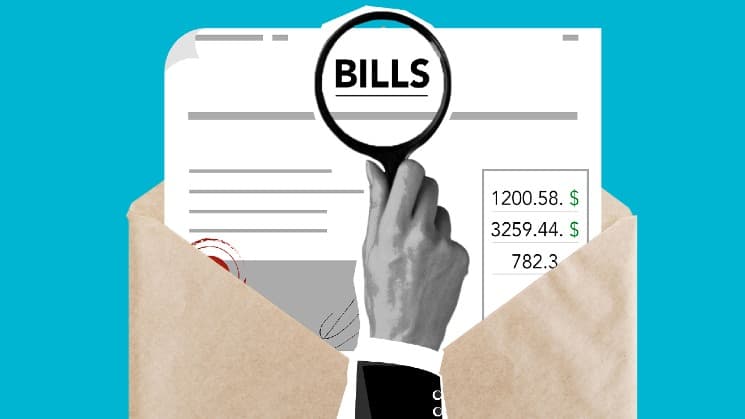
There are no international regulations capping roaming rates globally, which means home carriers must accept whatever price a foreign network charges and pass those costs on to the customer.
Some carriers offer 'roam like home' or international day-pass plans, but these often still carry meaningful daily fees and may throttle speeds after a fair-use threshold, making them an imperfect solution for longer trips.
| App | How to save | |
|---|---|---|
| Google Maps | Download offline maps before your trip to avoid using mobile data for navigation. | |
| Disable automatic media downloads so photos, videos, and documents are only downloaded when needed. | ||
| Turn off video autoplay and enable Data Saver mode to reduce data usage. | ||
| Disable video autoplay and background app refresh to minimize mobile data consumption. | ||
| TikTok | Lower the video quality and limit streaming time to reduce data usage. | |
| YouTube | Stream videos at a lower resolution or download them over Wi-Fi for offline viewing. | |
| Netflix | Download movies and TV shows before you travel instead of streaming over mobile data. | |
| Spotify | Download playlists and podcasts over Wi-Fi and use Offline Mode while traveling. | |
| Google Photos/iCloud | Turn off automatic photo and video backups over mobile data. | |
| Gmail | Reduce email sync frequency and download large attachments only when connected to Wi-Fi. | |
| Zoom/Microsoft Teams | Turn off your camera or join meetings with audio only whenever possible. | |
| Messenger | Disable automatic downloads of photos and videos in the app settings. | |
| Snapchat | Turn off background data and disable video autoplay to reduce data consumption. | |
| Web Browsing | Enable your browser's data-saving mode and avoid media-heavy websites when using mobile data. |
Portable Wi-Fi routers (pocket Wi-Fi) are another connectivity option, particularly in areas with poor mobile coverage, but they are costly to rent, bulky and inconvenient.
Buying a local SIM card online or at the destination offers cheaper data rates than carrier roaming but requires setup time. These, if bought abroad, may come with the hassle of finding a trustworthy retailer, KYC restrictions and limited plan options.
These are the most convenient option for connectivity abroad. Most mid-to-high-range smartphones released after 2022 support eSIM. If your device is eSIM enabled, then this is a viable option.
eSIMs activate by downloading a carrier profile, typically via QR code or an app, and can be set up before departure for immediate connectivity upon arrival at the destination.
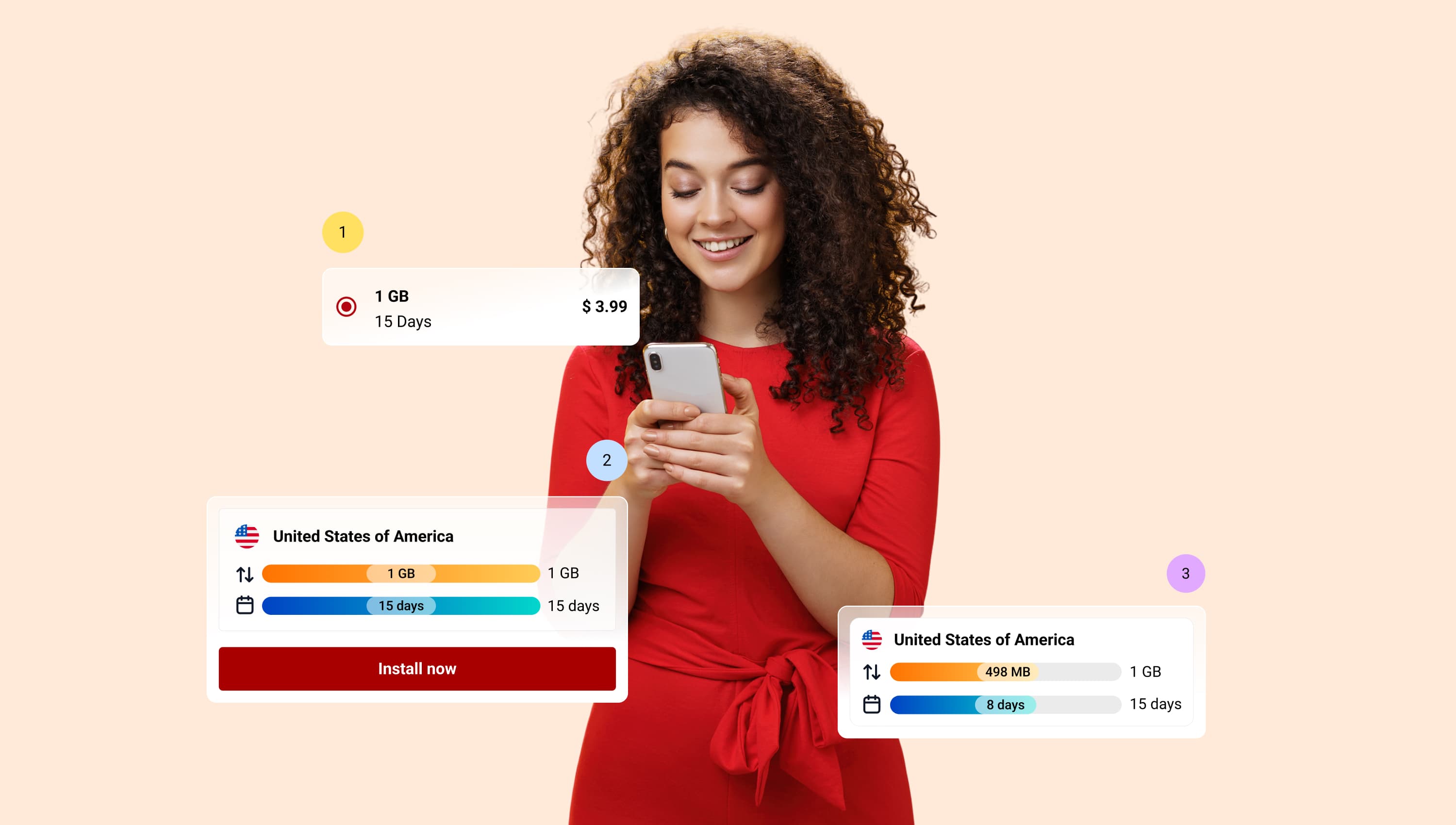
Data roaming makes it easy to stay connected while traveling, but that convenience can come with unpredictable and expensive charges. Background app activity, automatic updates, and postpaid billing can quickly turn ordinary phone use into an unpleasant surprise when you return home.
Switching off data roaming, reducing background data usage, and downloading content before your trip can help control costs. However, alternatives such as local SIM cards, pocket Wi-Fi, and travel eSIMs often provide better value, clearer pricing, and greater control over how much data you use.
For most modern travelers, a travel eSIM offers one of the simplest and most cost-effective ways to stay online abroad. With an eSIM from BeachSIM you enjoy reliable coverage, predictable costs and lightning fast interent.
About the author


Japan's extremely low violent crime rates make it one of the easiest places to relax as a traveler. Solo visitors, including women, often feel comfortable using trains, walking city streets, and exploring neighborhoods, with the usual common sense precautions.
Thailand proves you don't need a big budget to have a big adventure. While it may not be the ultra-cheap destination it was decades ago, you can still eat incredibly well, sleep comfortably, explore stunning places and travel around the country without overspending

Hop between islands whenever you want using easy ferries and short Binter flights, no group plans to juggle. In Las Palmas, you'll land among solo travelers and digital nomads who make arriving by yourself feel totally normal. The Canary Islands welcome solo adventures.
